When does a water heater need replacing?

Some problems end the life of a water heater on the spot. Others build slowly until repairs stop making sense. A tank that leaks from its body is the clearest case: the inner lining has failed and no repair will hold.
Beyond that, replacement starts to make sense when the heater is well into its second decade, when rust shows up in the hot water and on the tank, or when the same part keeps failing. Another common reason has nothing to do with damage. A household grows, a new bathroom goes in, and the old heater simply cannot keep up.
If you are not sure whether your heater can still be saved, start with our guide to standard tank water heater repair, which covers the parts that can be replaced and the signs that a tank is near the end.
How is a new water heater sized?
Sizing is the step that decides whether you are happy with a new heater for the next decade. Bigger is not automatically better. An oversized tank wastes energy keeping water hot that nobody uses, and an undersized one runs cold during the morning rush.
Tank heaters: first-hour rating
Tank heaters are compared by their first-hour rating, printed on the yellow EnergyGuide label. It tells you how much hot water the heater can deliver in an hour starting from a full tank. A good installer estimates your busiest hour, such as two showers, a dishwasher and a sink running close together, and matches the rating to it.
Tankless heaters: flow and temperature rise
Tankless units are sized by gallons per minute at a given temperature rise. Many showerheads use roughly 1.8 to 2.5 gallons per minute, so the question is how many fixtures run at once. Central Indiana’s incoming water gets colder in winter, which means the unit has to raise the temperature further. A tankless heater that seems fine in July can struggle in January if it was sized too close.
Tank, tankless or heat pump: which fits your home?

Most replacements are like-for-like, but a replacement is also the easiest moment to change type.
Tank (gas or electric)
The familiar option, and usually the simplest swap.
- Lower upfront cost
- Quick like-for-like install
- Standby heat loss
- Can run out during heavy use
Tankless
Heats water only when a tap opens.
- Continuous hot water within its flow limit
- Saves floor space
- Higher upfront cost
- Needs regular descaling in hard water
Heat pump (hybrid)
An electric tank that pulls heat from the surrounding air.
- Much lower running cost than standard electric
- Dehumidifies the space
- Needs room and airflow
- Taller and pricier than a standard tank
Switching from a tank to tankless often involves new venting, a larger gas line or new electrical work, so ask for those costs up front. Our tankless water heater page explains the upkeep those units need.
Should you stay with gas or electric?

The simplest and usually cheapest path is to replace like with like. A gas home with a working vent and gas line can drop in a new gas heater, and an electric home with the right circuit can take a new electric unit with few changes.
Switching fuel is possible but adds work. Going from electric to gas means running a gas line and installing a vent. Going from gas to electric may mean a new heavy-duty circuit and, in some homes, an electrical panel upgrade. Gas heaters generally recover faster after heavy use, while electric and heat pump units avoid combustion and venting entirely.
If your current heater has a history of pilot or burner trouble, our gas water heater repair page explains what those problems usually mean. For element and thermostat problems on electric units, see electric water heater troubleshooting. Sometimes one repair buys more time before a replacement is truly needed.
What should a proper installation include?
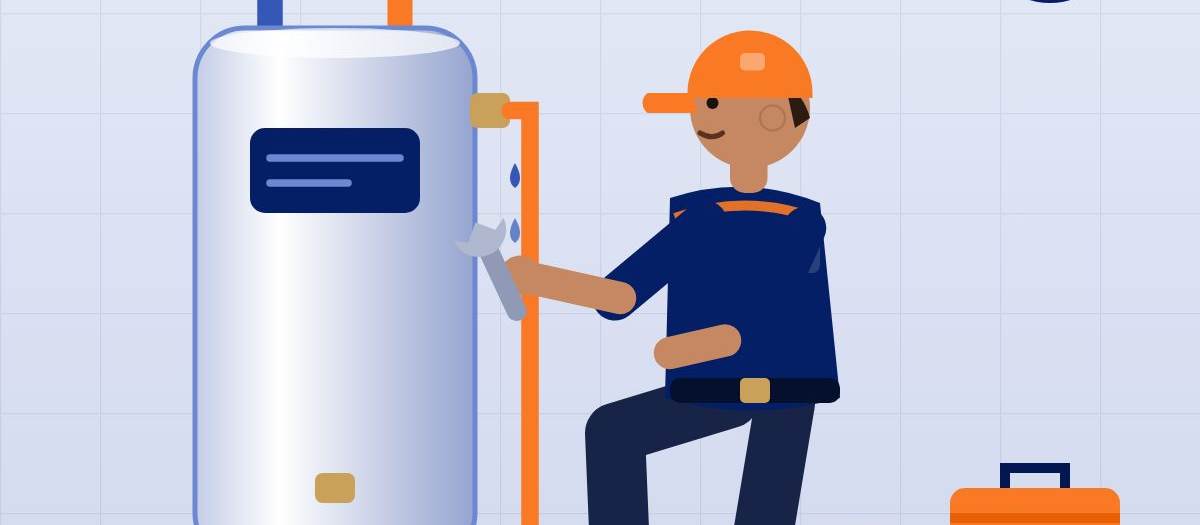
A water heater is more than a tank and two pipes. These are the parts that separate a careful install from a rushed one:
- Removal and haul-away. The old unit is drained, disconnected and taken away.
- A new relief valve and discharge pipe. The discharge pipe should run to within a few inches of the floor or to a safe drain.
- A drain pan. Required in many locations and smart anywhere a leak could damage the floor below.
- A thermal expansion tank. Homes with a check valve or pressure regulator on the main line usually need one to absorb pressure as water heats.
- Correct venting and gas connections. On gas units, the vent must be the right size and pitch, and every gas joint is leak-tested.
- Proper electrical work. Electric units need the right breaker and wire size, especially when upgrading capacity.
- Permits and inspection where required. Many Indiana communities require a plumbing permit for water heater replacement. Your installer should know the local rules.
Keep the paperwork. Register the new heater with the manufacturer and keep the receipt. Many warranties depend on it.
8 signs it is time to replace your water heater
Any one of these is worth a conversation with a technician. Several together usually mean replacement.
- Water leaking from the tank body. No repair holds once the inner tank has failed.
- Rusty hot water. Especially when the cold water runs clear.
- A heater older than about 10 to 12 years. Many tanks reach the end of their life in this range.
- Repairs every year or so. Repeated repair bills add up quickly.
- Rumbling that flushing no longer fixes. Hardened sediment can be impossible to clear.
- Not enough hot water for your household. The heater may simply be too small now.
- Rising energy bills. Older units lose efficiency as sediment builds.
- Corrosion around fittings and the base. A sign of moisture problems that rarely improve.
How replacement day usually goes
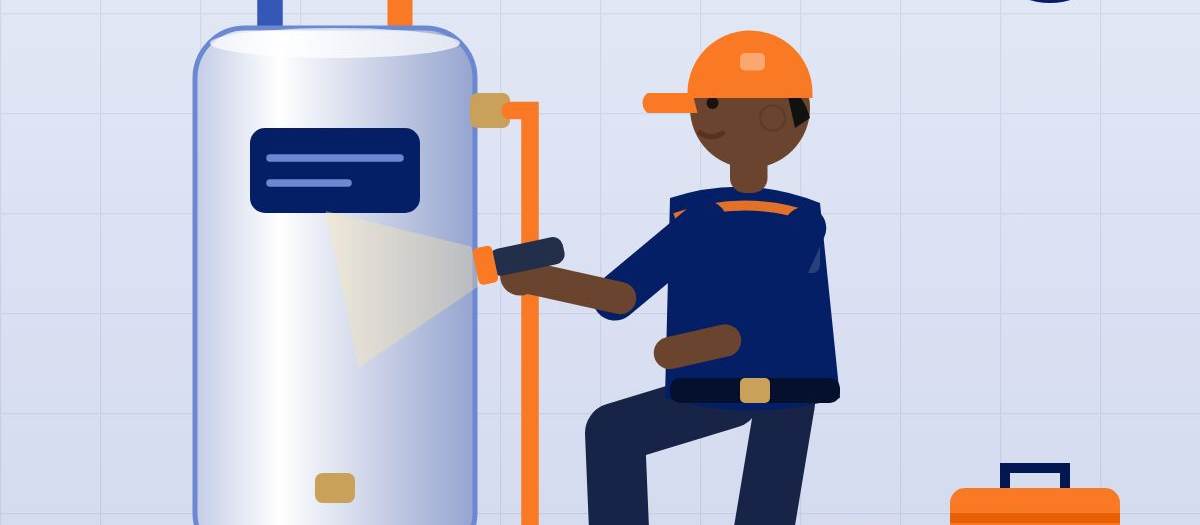
A straightforward like-for-like swap often fits into a single visit. Changing type or location takes longer.
- Confirm the plan. Size, type, any code updates and the full price are agreed before work begins.
- Shut down and drain. Water, power or gas are turned off and the old tank is drained.
- Remove the old unit. Connections are cut or unthreaded and the heater is carried out.
- Set and connect the new heater. Water, gas or electric, venting, the relief valve, pan and expansion tank are installed.
- Fill, test and explain. The tank is filled before power or gas is turned on, every joint is checked and you are shown the shutoff and settings.
Never power an empty tank. Turning on an electric heater before it is full can burn out the elements in seconds. A good installer always fills first.
What affects the cost of a new water heater?

| Factor | How it affects the price |
|---|---|
| Type of heater | Standard tanks cost least; tankless and heat pump units cost more upfront. |
| Size and efficiency | Larger capacity and higher efficiency ratings raise the price of the unit. |
| Switching types | New venting, gas lines or electrical circuits add labor and materials. |
| Code updates | Drain pans, expansion tanks and venting corrections are often needed. |
| Location | Attics, crawl spaces and tight closets make removal and install harder. |
| Permit fees | Vary by city where permits are required. |
How to make a new water heater last

The first year is when good habits pay off. Set the temperature to a sensible level, check the relief valve once a year and keep the area around the heater clear. In hard-water homes, plan a yearly flush for tanks or a descale for tankless units, both covered on our flushing and maintenance page.
Ask your installer when the anode rod should first be checked. Replacing it on time is the single biggest thing you can do to stretch a tank’s life.
Replacement questions
How long does a water heater replacement take?
A like-for-like tank swap is often finished in a few hours. Switching to tankless or moving the heater to a new spot usually takes longer because of venting, gas or electrical changes.
Do I need a permit to replace a water heater in Indiana?
Many Indiana communities require a plumbing permit for water heater replacement. Rules change, so ask your installer to confirm and handle it if one is needed.
Should I get a bigger water heater than my old one?
Only if your old heater ran short. Sizing should match how your household uses hot water today, not simply the old tank’s size.
Can I switch from a tank to a tankless water heater?
Usually, yes. It often needs a larger gas line or new electrical circuit and different venting, so get a quote that includes those changes.
Will the installer take my old water heater away?
Most replacement quotes include removal and disposal, but it is worth confirming before work starts.
What warranty comes with a new water heater?
Manufacturers offer warranties on the tank and parts, and installers may offer their own labor warranty. Ask for both in writing and register the unit.