What is tankless water heater leak repair?
A tankless water heater has no storage tank. Water passes through a heat exchanger inside a wall-mounted cabinet and is heated only when a tap opens. That design saves space and standby energy, but it also packs water lines, gas or electric components and a circuit board into one small box.
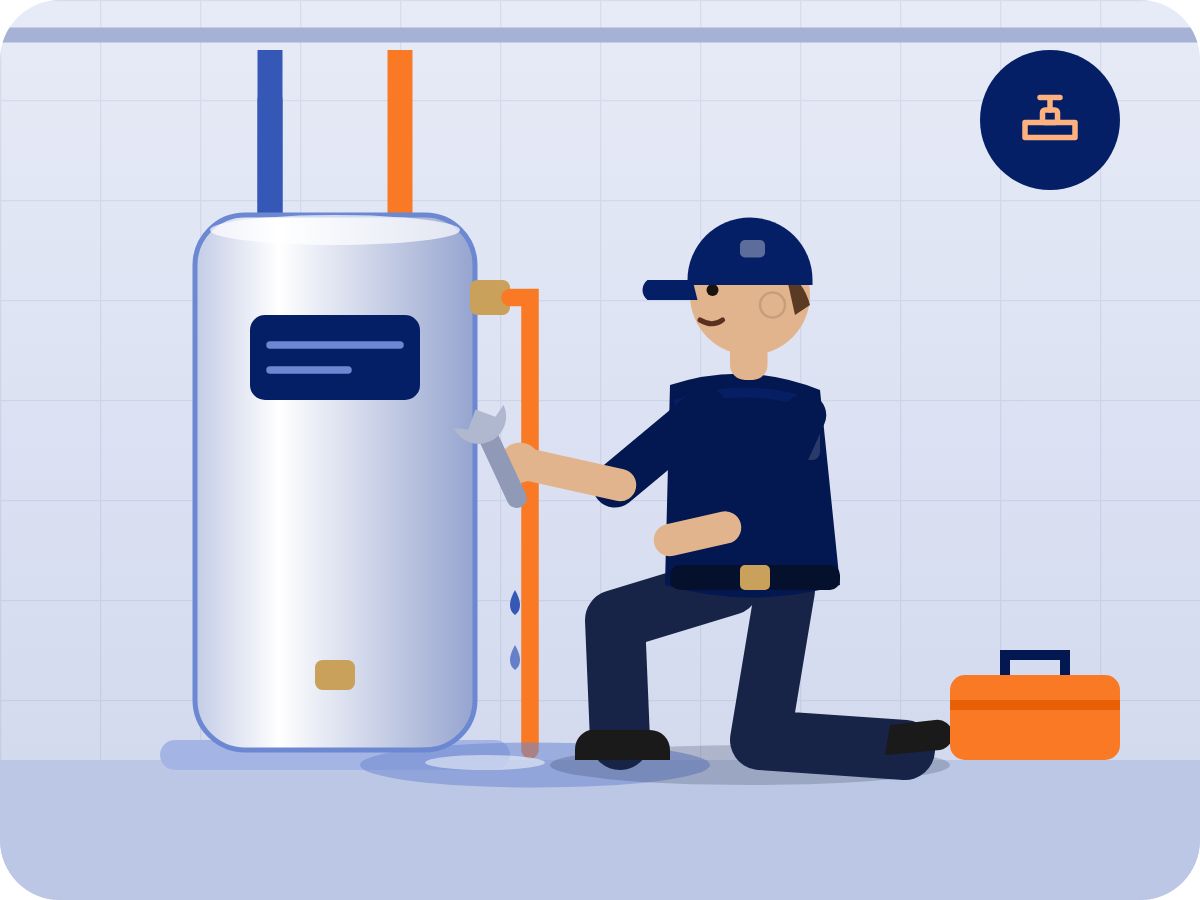
Tankless leaks rarely look like a flooded floor. More often you see a steady drip from the bottom of the cabinet, a wet stain spreading down the wall, or rust marks on the pipes underneath. Because the electronics sit inches from the water, even a small leak is worth fixing quickly.
Tankless leak repair means finding exactly where the water escapes, replacing the worn seal, valve or fitting, and dealing with the scale or pressure problem that caused it so the leak does not return.
Where do tankless heaters leak, and how is each fixed?
Most leaks start at one of five places. Each has its own fix.
Water connections and isolation valves
The cold inlet and hot outlet connect under the unit, usually through a pair of isolation valves with service ports. Washers dry out and threads loosen with vibration and temperature swings. The fix is usually new washers or a replacement valve set.
Pressure relief valve
Like a tank heater, most tankless installs have a relief valve. If it drips, either the valve is worn or water pressure in the home is too high. The valve is tested and replaced, and pressure is measured at the same time. More on relief valves is on our valve and component repair page.
Heat exchanger
The heat exchanger is the core of the unit. Scale and years of heating cycles can crack a joint or create a pinhole. Some can be repaired, but a leaking heat exchanger is often replaced as a part, and on older units it can tip the decision toward a new heater.
Condensate line
High-efficiency condensing models produce acidic condensate that drains through a tube, often through a neutralizer. A cracked line or clogged trap leaks inside the cabinet or onto the floor and is usually a simple replacement.
Inlet filter and drain caps
The small screen at the cold inlet and the drain plugs are removed during cleaning. If they are not reseated properly, they can drip afterward.
8 signs your tankless unit is leaking or about to
Tankless leaks are easy to miss because the unit hangs on a wall. Look for these.
- Drips from the bottom of the cabinet. Water inside the cover is never normal.
- Water stains running down the wall. A slow leak often travels behind the unit before it shows.
- Rust or green crust on the fittings. Mineral and corrosion buildup marks a slow, long-running drip.
- A wet or crusted relief valve outlet. The valve has been opening more often than it should.
- Error codes on the display. Many units flag overheating, flow or leak-related faults.
- Hot water that fluctuates. Scale inside the heat exchanger affects both heating and seals.
- A condensate line that overflows. Blocked lines back up into the cabinet on condensing models.
- Water near the outdoor or garage install after a freeze. Lines and the heat exchanger can split in a hard frost.
Spotting one of these early usually means a small repair rather than a damaged circuit board or heat exchanger.
Why do tankless water heaters leak?
- Hard-water scale. Much of Indiana has hard water. Minerals coat the inside of the heat exchanger, which makes it run hotter and stresses joints and seals.
- High water pressure and water hammer. The fast-closing valves inside a tankless unit can send shock waves through the pipes when pressure is high, wearing out washers and connections.
- Acidic condensate. On condensing models, a neglected neutralizer or blocked drain lets acidic water sit where it should not.
- Freezing. Units in garages or on exterior walls can freeze during a cold snap if power is lost or freeze protection is not working.
- Installation shortcuts. Unsupported pipes, missing isolation valves or a poorly routed vent can all lead to leaks years later.
- Normal wear. Rubber seals and gaskets age, and every heating cycle expands and contracts the metal around them.
What to do when you spot a leak
Keep it simple and stay outside the cabinet.
- Turn off the power. Switch off the breaker or unplug the unit, which most gas tankless models also need for their controls.
- Close the gas valve. On a gas unit, turn the yellow-handled valve on the gas line so the handle sits across the pipe.
- Close the isolation valves. Turn both the cold inlet and the hot outlet valves under the unit to off.
- Write down any error code. Note it before the power goes off if you can. It helps the technician narrow the cause.
- Photograph the drip point. A clear picture of where water collects saves time on arrival.
- Protect the floor. Place a bucket or towels under the unit.
Leave the front cover on. The cabinet holds gas parts, high voltage and hot surfaces. Removing it is a job for the technician.
Some dripping is normal. On condensing models, a steady trickle from the condensate tube into a drain is expected. Water anywhere else is not.
What happens during a tankless leak repair visit?
A typical visit follows these steps.
- Shutdown and access. Power, gas and water are confirmed off, and the cover is removed to inspect inside.
- Trace the leak. Connections, valves, the heat exchanger and the condensate path are checked one by one.
- Quote before work. You hear which part failed, the repair options and what each costs.
- Repair. Seals, valves or lines are replaced. If scale is involved, the unit is descaled through the service ports.
- Pressure and leak test. Water is restored, the unit runs through several heating cycles and every joint is checked dry.
If the unit is also struggling to heat, the visit overlaps with our guide to no hot water repair.
Why descaling matters in Indiana
Descaling circulates a cleaning solution through the heat exchanger with a small pump connected to the isolation valve ports. It dissolves the mineral layer that hard water leaves behind. A clean heat exchanger heats more efficiently and puts less stress on seals and joints, which is the best leak prevention a tankless unit can get.
How often depends on your water hardness and how much hot water you use. Many homes in hard-water areas descale at least once a year, and homes with a water softener can often go longer. Our flushing and maintenance page covers the schedule for both tank and tankless systems.
Repair the unit or replace it?
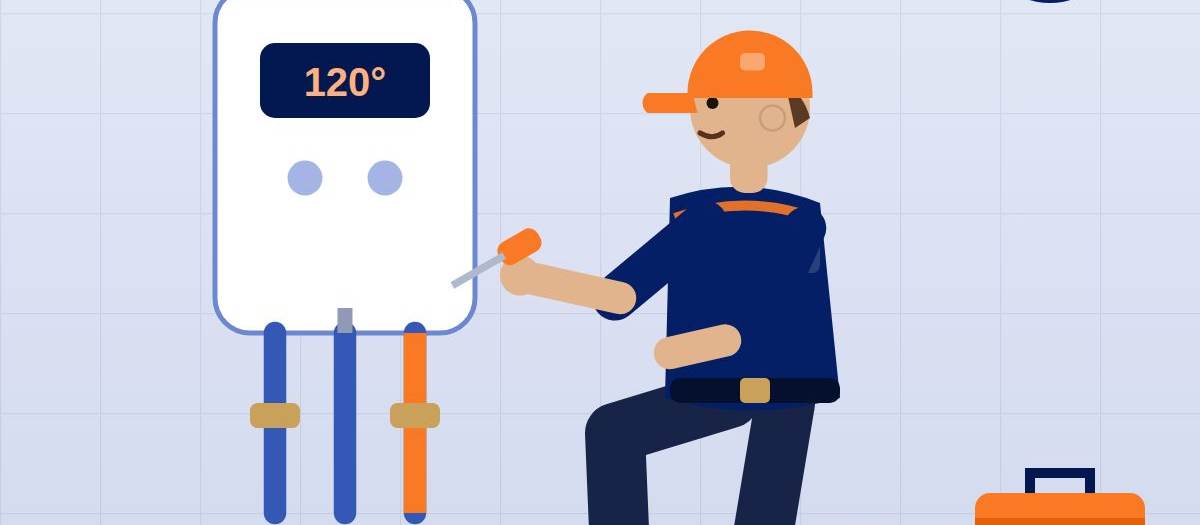
Most tankless leaks are worth repairing. Washers, valves, condensate lines and relief valves are inexpensive parts, and a well-maintained unit can keep running for many years after they are replaced.
The picture changes when the heat exchanger itself has failed on an older unit, especially if it is out of warranty or the unit has needed several repairs already. At that point, compare the repair quote with the cost of a new heater. If you are weighing a new tankless model against going back to a tank, our replacement and installation page walks through sizing and the trade-offs of each.
Whichever way you go, ask about isolation valves and a descaling schedule, since both make the next unit last longer.
What affects the cost of a tankless leak repair?
| Factor | How it affects the price |
|---|---|
| Leak location | Washers and valves cost far less than a heat exchanger. |
| Brand and model | Part availability and price vary by manufacturer. |
| Warranty status | Heat exchangers often carry longer warranties than other parts. Check yours. |
| Descaling needed | Adds time and materials, but often prevents repeat leaks. |
| Install location | Attic, crawl space or exterior installs take longer to service. |
Tankless leak questions
Is it normal for water to drip from my tankless water heater?
Only from the condensate line on a condensing model, and only into a drain. Water dripping from the cabinet, the fittings or the relief valve means something needs attention.
Can a leaking heat exchanger be repaired?
Sometimes, but in most cases the heat exchanger is replaced as a complete part. On an older unit, the cost of that part can make a new heater the better value.
How often should a tankless water heater be descaled?
In hard-water areas like central Indiana, many homeowners descale at least once a year. Homes with a water softener or light hot-water use can often go longer.
Why does my tankless unit show an error code after a leak?
Water can trip safety sensors, and scale or low flow can trigger overheating codes. The code points the technician toward the right part, so note it before turning the power off.
Can isolation valves be added if my unit does not have them?
Yes. Adding a valve kit with service ports makes future descaling and repairs much easier, and it is a common upgrade during a leak repair.
Will a leak damage the electronics in my tankless heater?
It can. Water on the circuit board or igniter can cause faults or failures. Shutting off power quickly and fixing the leak promptly gives the electronics the best chance.